Small jurisdictions have long played an outsized role in global finance. Singapore, Dubai, and Hong Kong were once peripheral markets. Today they are among the world’s most influential financial centres. Their success followed a familiar formula: regulatory clarity, openness to innovation, and an ambition to compete globally rather than regionally.
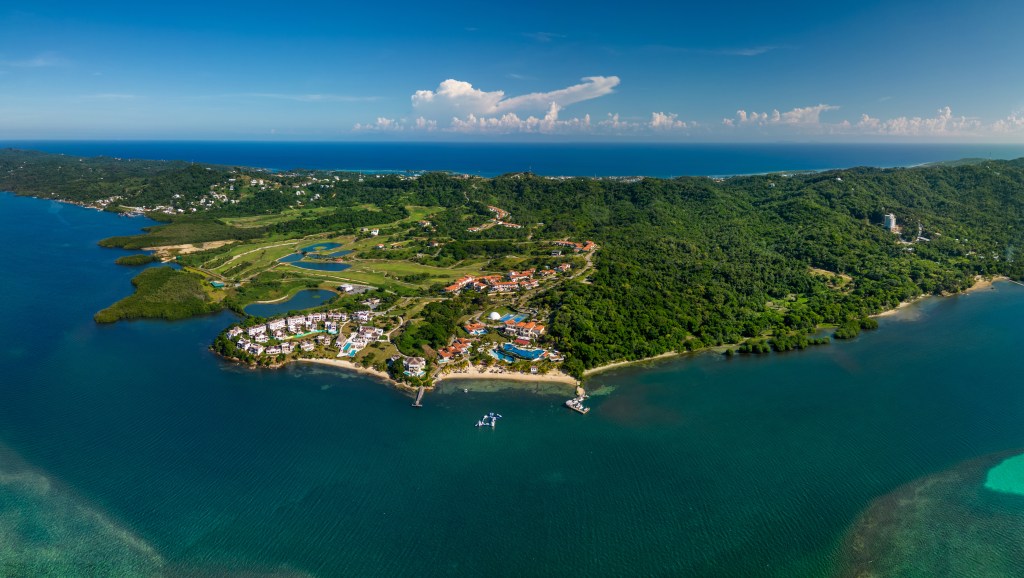
On the Caribbean island of Roatán, Honduras, a similar initiative is quietly taking shape. The Roatán International Financial Center (RIFC), operating within Próspera ZEDE, seeks to position the island as a new platform for financial services, fintech, and digital asset innovation in the Americas.
The idea is simple but ambitious: build a jurisdiction capable of attracting global financial entrepreneurs by combining credible regulation with speed, efficiency, and international connectivity.
A Financial Centre for a Changing Industry
The global financial system is undergoing rapid transformation. Digital payments, blockchain infrastructure, tokenised assets, and new forms of cross-border financial services are reshaping the industry. Yet regulation has struggled to keep pace.
In many countries, innovators face either regulatory uncertainty or regulatory overreach. Europe’s Markets in Crypto-Assets Regulation (MiCA), for instance, is imposing quasi-banking compliance standards on digital asset firms. Meanwhile, in the United States, emerging federal frameworks for stablecoins are introducing new layers of regulatory complexity.
These developments are expected to trigger significant market consolidation across the fintech and digital asset industries. Smaller firms in particular are searching for jurisdictions capable of offering regulatory certainty without prohibitive costs.
It is precisely this gap that Roatán hopes to fill.
The Roatán Model
The Roatán International Financial Center operates under the supervision of the Roatán Financial Services Authority (RFSA), a regulatory body responsible for licensing and supervising financial service providers operating within the jurisdiction.
The RFSA’s mandate is straightforward: create a financial regulatory framework capable of supporting modern financial services, including fintech, investment platforms, digital asset infrastructure, and cross-border payments.
By 2025 the jurisdiction had already issued licenses and regulatory authorisations to companies operating across a range of financial services sectors including fintech payments, digital asset brokerage, lending platforms, fiduciary services, and payment infrastructure.
Early growth indicators suggest the ecosystem is beginning to gain traction. The number of regulated entities within the financial centre doubled between 2024 and 2025, while governance revenue associated with financial services activities increased significantly during the same period.
Why Roatán?
Financial centres succeed not only because of regulation but because of geography and economics.
Roatán sits at a strategic crossroads between North America and Latin America. The island offers direct connectivity to the United States while remaining close to emerging markets across Central and South America.
Equally important is the jurisdiction’s regulatory philosophy.
Rather than attempting to replicate the heavy compliance frameworks of large financial centres, the RIFC has adopted a more pragmatic approach: establish credible regulatory standards while maintaining streamlined licensing procedures and competitive operational costs.
For emerging fintech companies, the difference can be substantial. Licensing processes that may take years in major jurisdictions can often be completed in months.
A Platform for Financial Innovation
One of the most distinctive features of the Roatán International Financial Center is its openness to financial innovation.
The jurisdiction has developed regulatory frameworks for activities such as:
- Money transmission and payment infrastructure
- Digital asset custody and brokerage
- Investment companies and capital markets offerings
- Trust companies and fiduciary services
- Non-bank lending platforms
- FinTech trading and transaction systems
For companies operating at the intersection of technology and finance, such regulatory clarity can be decisive.
Several firms have already relocated or expanded operations into Próspera after comparing alternative jurisdictions, citing the regulatory accessibility and supervisory responsiveness of the RFSA.
The Economics of Financial Centres
The appeal of financial centres extends far beyond financial companies themselves.
Financial services are among the most scalable sectors in the modern economy. A single platform can serve customers across multiple countries, generating economic activity far beyond the physical footprint of the jurisdiction hosting it.
For Roatán, the potential implications are significant. A successful financial centre could attract international capital, create high-skilled employment, and integrate the region into global financial markets.
Even in its early stages, the RIFC is already contributing a growing share of Próspera’s governance revenue and economic activity.
The “Hong Kong of the Americas”?
Observers of emerging financial centres often draw comparisons with Hong Kong, Dubai or Singapore, jurisdictions that began as small markets but successfully positioned themselves as global financial hubs.
Roatán’s ambitions are similar, though the path will inevitably be long.
Building a financial centre requires not only regulation but also trust, international partnerships, and a steady pipeline of financial institutions willing to establish a presence.
Yet the ingredients are beginning to take shape.
With regulatory innovation, growing international interest in fintech, and a global financial system undergoing structural change, Roatán may be well positioned to capture a niche in the evolving architecture of global finance.
A Caribbean Initiative in Global Finance
The development of the Roatán International Financial Center remains in its early stages. But its premise reflects a broader trend: in a world where capital and technology move quickly, jurisdictions that can adapt quickly may gain an outsized advantage.
For Honduras and the wider region, the experiment underway in Roatán represents something rare—an attempt to build a modern financial ecosystem from the ground up.
If successful, the island could become an unexpected player in the global financial landscape.
And for a small Caribbean island, that would be no small achievement.

 Doing Business
Leave a comment